Excuse Me… You Love Trump?
I spent last month in China. In conversations with entrepreneurs, educators and investors, a friend surfaced an interesting fact: that the Chinese people now have a kind of “love” for Donald Trump. But it’s not admiration. It’s strategic. On Chinese social media, they call him 川建国 (Chuān Jiànguó) “Trump the Nation Builder.”
He’s seen as an 加速师 (jiāsù shī) (an accelerator). China already had a long-term vision. None of this began with Trump. But many believe he sped things up. His disruption of alliances, his inward focus on America First, his unpredictability, all of it reduced resistance. Every time he berated an ally, netizens saluted him as 好同志 (hǎo tóngzhì) “Good Comrade.” It is either a coincidence or a strategy that China made a new friend.
I assumed the mid-2025 tariffs would breed resentment. Instead, people don’t talk about it anymore… instead, they talk about capacity building. External pressure was a forcing function, not a setback.
In Shenzhen, they boast about hardware dominance. In Hangzhou, the conversation is about scale, absorbing surrounding cities into a larger digital ecosystem. Suzhou, built on patient Singaporean capital, is quietly becoming a third force.
And then there’s Hainan, which is a different beast entirely. On that island, 26 Chinese and foreign universities now sit side by side, from Beijing’s top schools to Britain’s University of Glasgow. It’s a bet on something slower and harder to measure: cross-border talent. While the West argues about walls, Hainan is building a gateway.
Let me be clear: I am not saying China is out of the tariff war. The slowdown is real and can easily be felt. People talk about it, and the malls are emptier than before. I could feel the pressure, the hesitation, and the visible tightening just by talking to real parents of students, who own these small businesses.
But my assumption that Chinese people are focused on this: that tariffs dominate their thinking, was wrong. The mindset wasn’t to blame. It was an adjustment.
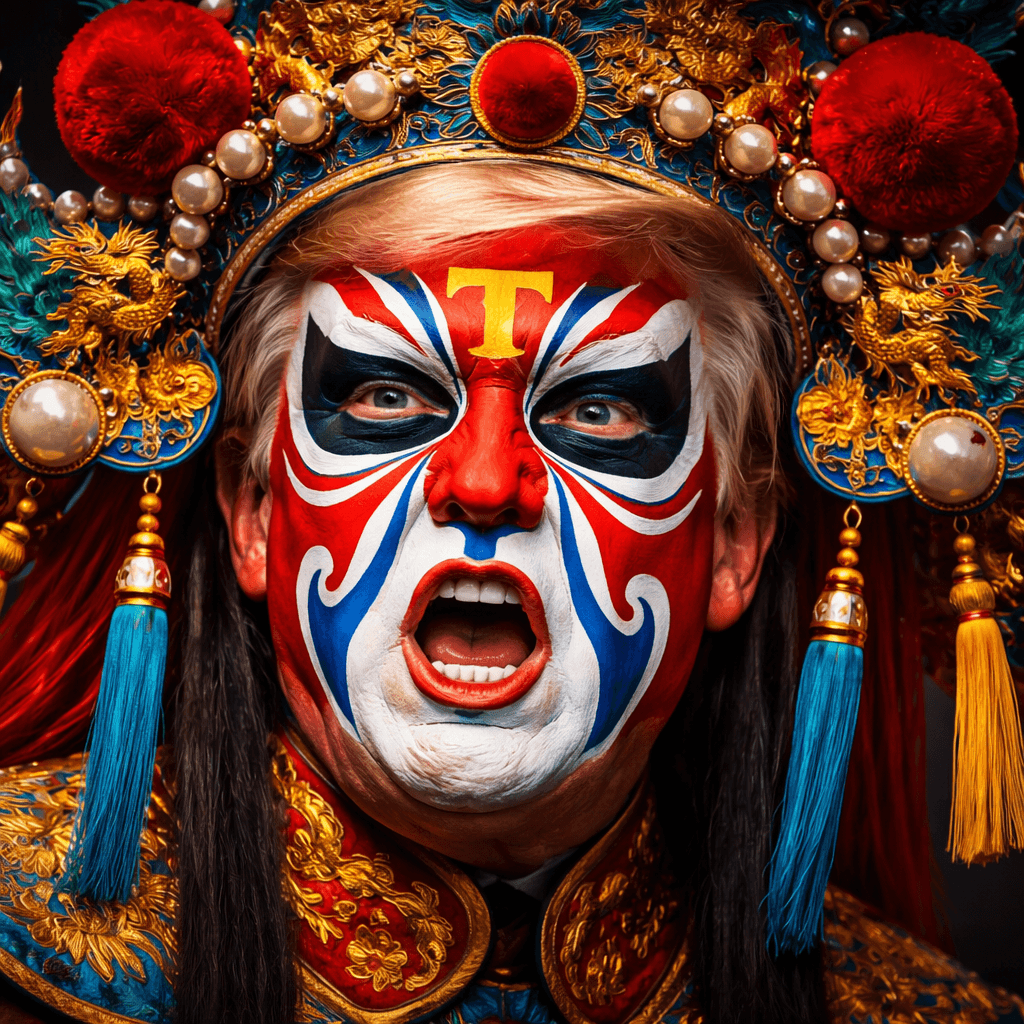
Trump is watched like 川剧 (Chuān Jù) (Sichuan opera). The masks change in an instant. The audience laughs, then gasps.
Many decades ago, I remember our tiny island with no natural resources invested in China, and now, Singapore is the largest foreign investor in all of China. Since 2022, Singapore has held that position, with cumulative actual investment reaching US$141 billion by the end of 2023. That same patience of planting seeds, waiting through doubt, shapes how many here view Trump: not a threat, but a variable.
One tennis player and entrepreneur put it simply: “This is like tennis. You don’t always need to hit the winning shot. Sometimes, you just wait for your opponent to make mistakes.” Unforced errors matter.
Chinese netizens who watch this spectacle call themselves 吃瓜群众 (chī guā qúnzhòng) (melon‑eating spectators). Not fans. Not enemies. Just watching.
Trump is not admired as a champion. He’s appreciated as an accelerator.
Next time you hear someone ask why Chinese people love Trump, you’ll know the question is wrong. They don’t love him. They’re just celebrating as they watch him fault.
One more thought, though.
I don’t think Singapore’s founding fathers saw Trump coming. No one did. But they saw something steady beneath the chaos. They saw a giant waking up. And they bet on it when the rest of the world was still looking away.
That same quiet conviction with patience, not prediction, is what this trip left me wondering about. What are we failing to see today? And are we still capable of that kind of lonely, long bet?
That’s Singapore’s powerful bygones in China. Therefore, we know that letting bygones be bygones is itself a fault, because while some choose to forget, others are still building on what they remember.
To date, All Gifted graduates have successfully secured admission to leading universities in China (besides the US, Australia, Singapore and other countries). We offer a structured, direct pathway. If you or your child is interested in studying at top 985/211 institutions or Ivy Leagues, whether through paid enrollment or scholarship, please contact us for further details. We will get your Chinese (or English) up to speed for that most fascinating university/college journey of a lifetime.
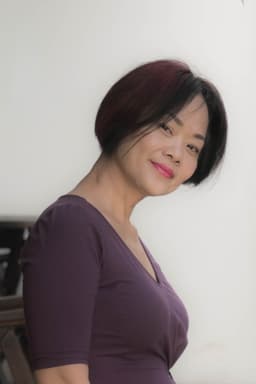
Harvard-trained educator, former SMU full-time lecturer, and mother of five — all of whom entered university between the ages of 11 and 15. Pamela founded All Gifted School on the conviction that all children are differently gifted, and that education's job is to bring every child's potential to its fullest.
If this resonated with you...
Education insights that make you think differently.
Join parents across 10 countries who read Pamela's weekly insights on education, parenting and raising gifted learners.
No spam. Unsubscribe anytime. We respect your privacy.